Higher fuel costs – only partly mitigated by hedging – and potentially rising inflation, and the resultant impact on operating costs and passenger demand, will be felt across the whole industry, remarked Raman Singla, the Director at Fitch ratings.
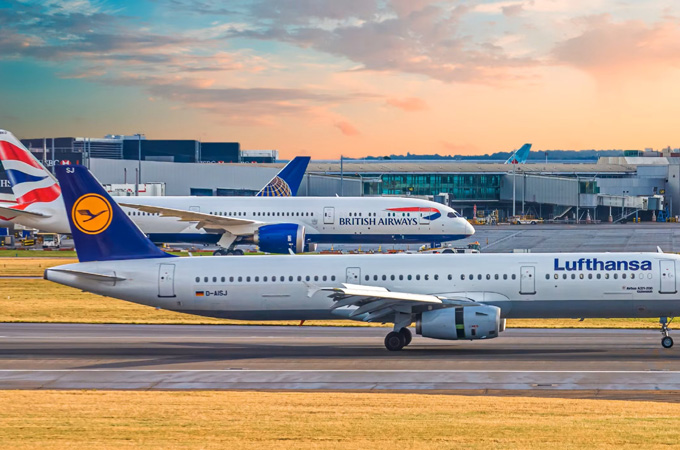
Europe-to-Middle East flights (including countries not currently affected by airspace disruption) represent about 6% of all EMEA flights (both intra- and non-intra-Europe). However, there is significant uncertainty over the duration of the disruption, and a more prolonged event could have more severe implications.The airlines most immediately affected are those with hubs in affected countries, such as the UAE and Qatar, or with limited or no fuel hedging in place, explained Singla. "Etihad Airways is the most operationally affected among Fitch-rated EMEA airlines. However, we view risk as consistent with its ‘AA-’ rating, given its good liquidity and strong state linkages that result in a top-down rating approach from Abu Dhabi’s ‘AA’ rating. Air Baltic is the most exposed to higher fuel costs due to its low hedging," he noted.The implications of Fitch's baseline conflict assumptions for EMEA carriers, including British Airways, Deutsche Lufthansa, Air France-KLM and Turkish Airlines, are limited. Among Fitch-rated EMEA low-cost carriers (LCCs), Pegasus has the highest exposure to the affected region (potentially a mid-teens percentage of total volumes) while Ryanair has only modest exposure and Wizz Air was already reducing its presence in the region. US airlines JetBlue, WestJet and American Airlines are more exposed to higher fuel costs due to limited rating headroom, it stated.A protracted or broadening conflict could mean sustained higher oil prices and disruption to the broader Europe-Asia air corridor, said the expert. Furthermore, significant economic weakening and rising inflation could reduce demand for air travel. This could lead to excess capacity across carriers, in turn reducing earnings and causing significant cash burn, particularly among Middle East carriers. This could have negative rating implications, he added.The Asia-Europe air corridor is currently operating, although potentially with longer routes. This enables carriers such as British Airways, Air France-KLM, Lufthansa and Turkish Airlines to continue operating flights by bypassing disrupted airspace. "We estimate these carriers’ disrupted capacity at around a mid-single-digit percentage of their respective total network capacity," stated Sangla.A large share of passenger traffic through the Middle East hubs is transit, meaning that Asia-Europe flights that continue to operate could benefit from higher ticket prices and cargo yields. This would partially offset the negative financial impact of the disruption for most EMEA network carriers. Some inbound tourism-driven demand for the Middle East could also shift to unaffected areas of the region, North Africa or southern Europe.According to Fitch, fuel hedging limits the short-term impact of higher oil prices for most EMEA carriers. Sustained higher fuel prices would affect profitability as existing hedges roll off, particularly if passenger demand is also affected by rising inflation. North American airlines are largely unhedged, leaving them more exposed to a near-term fuel spike. Middle East crude produces a higher proportion of distillates, so jet fuel prices could rise more than crude prices, it added.-TradeArabia News Service
Travel, Tourism & Hospitality
EMEA carriers have rating headroom to weather short-term conflict: Fitch