
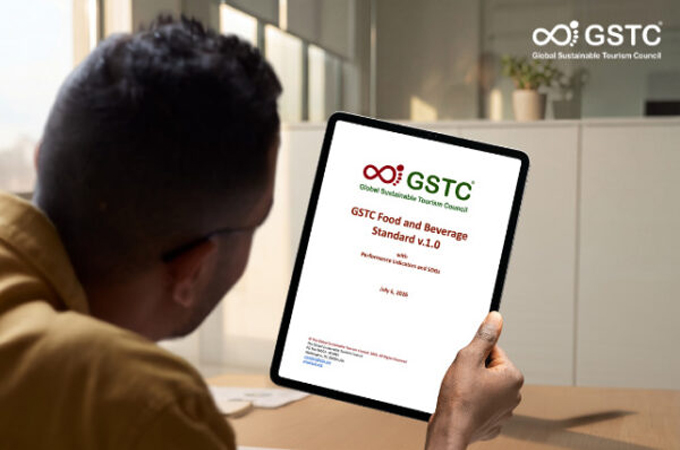
The Global Sustainable Tourism Council (GSTC) has announced the publication of its new GSTC Food and Beverage Standard, expanding its global framework for sustainability in the tourism sector.
The standard is designed to guide food and beverage service
providers in adopting more sustainable practices across operations, supply
chains, and guest experiences.
The GSTC standards are internationally recognised benchmarks
for sustainable tourism and are used for education, policy development,
certification, and performance evaluation.
They are structured around four pillars: sustainable
management, socioeconomic impacts, cultural impacts, and environmental impacts.
“The food and beverage service sector is everywhere in the
tourism value chain, and the development of the GSTC Food and Beverage Standard
marks another meaningful step in expanding the application of global
sustainability standards across the tourism industry. This progress reflects
the valuable collaboration and commitment of the many contributors involved and
reinforces GSTC’s continued dedication to advancing sustainability throughout
the sector, which now includes six sets of GSTC Standards,” said Randy
Durband, CEO of GSTC.
The new Food and Beverage Standard becomes the sixth set,
alongside existing standards for hotels, tour operators, destinations, MICE,
and attractions.
Food and beverage services are a critical part of the
tourism value chain, influencing resource use, waste management, local
sourcing, and community wellbeing.
The new standard aims to provide a clear, practical
framework to improve sustainability performance and strengthen consistency
across the sector.
Developed over a 24-month process from June 2024 to June
2026, the standard followed GSTC’s formal standard-setting procedures and
included feasibility assessments, public consultations, and technical reviews
to ensure clarity, measurability, and practicality.
The GSTC also highlights alignment with the UN Sustainable
Development Goals, noting that the standards support environmental protection,
social responsibility, and economic development within global tourism systems. -TradeArabia News Service