
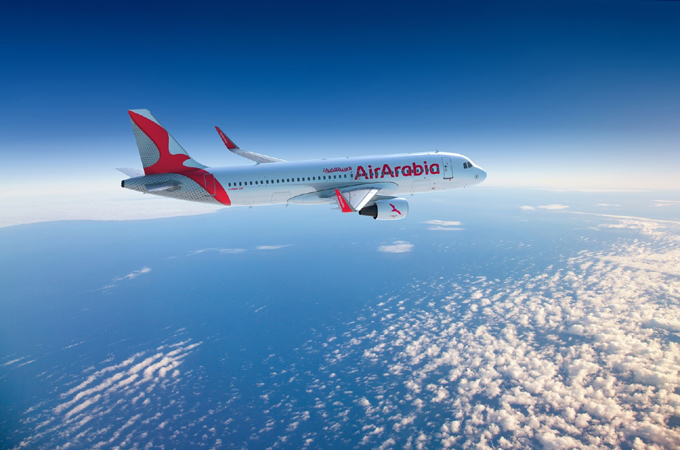
Air Arabia reported a 51% decline in first-half net profit to AED 374 million ($102 million), as the Middle East and North Africa’s largest low-cost carrier faced reduced capacity, airspace closures and record-high fuel prices linked to the ongoing regional conflict.
For the six months ended June 30, 2026, revenues fell 1% to
AED 3.48 billion from AED 3.52 billion a year earlier.
The airline carried more than 8.7 million passengers across
its operating hubs, down 14% year-on-year, while maintaining an average seat
load factor of 83%, highlighting resilient demand despite operational
disruptions.
Second-quarter net profit fell 77% to AED 96 million, while
revenues declined 3% to AED 1.68 billion.
Passenger numbers dropped 23% to more than 3.9 million
during the quarter, reflecting reduced operating capacity, while the average
seat load factor stood at 81%.
Air Arabia said its first-half performance was significantly
affected by the regional conflict, which began in February and disrupted
operations through the remainder of the period.
Airspace closures, temporary operational restrictions, lower
capacity and record-high fuel prices weighed on the airline’s results.
Sheikh Abdullah Bin Mohammad Al Thani, Chairman of Air
Arabia, said: "Air Arabia’s ability to remain profitable during the first
half of the year, amid the geopolitical conflict that disrupted the aviation
industry throughout the period, reflects the resilience of our business model,
the strength of our financial position, and the agility of our management
team."
He added: "The conflict significantly impacted the
industry through multiple airspace closures, reduced operating capacity, and
rising operating costs driven by record-high fuel prices. Throughout this
period, we remained focused on maintaining network connectivity, adapting our
operations to rapidly evolving circumstances, and exercising disciplined cost
management while preserving operational efficiency."
Despite the challenging environment, Air Arabia continued to
invest in fleet and network expansion.
It added six aircraft during the first half, taking its
fleet to 96 owned and leased Airbus A320 and A321 aircraft.
The carrier also launched five new routes across its hubs in
the UAE, Morocco, Egypt and Pakistan.
In June, Air Arabia was named “Most Sustainable Low-Cost
Airline in the MENA Region 2026” by World Finance Magazine under its annual
Sustainability Awards Programme.
Sheikh Abdullah concluded: "As market conditions continue to improve, we remain confident in the strength of the business fundamentals and our ability to navigate an evolving operating environment. Supported by a robust business model, a disciplined financial approach, and continued demand for our value-driven product, we remain committed to serving our customers, expanding our network responsibly, and creating sustainable long-term value for all our stakeholders." -TradeArabia News Service