
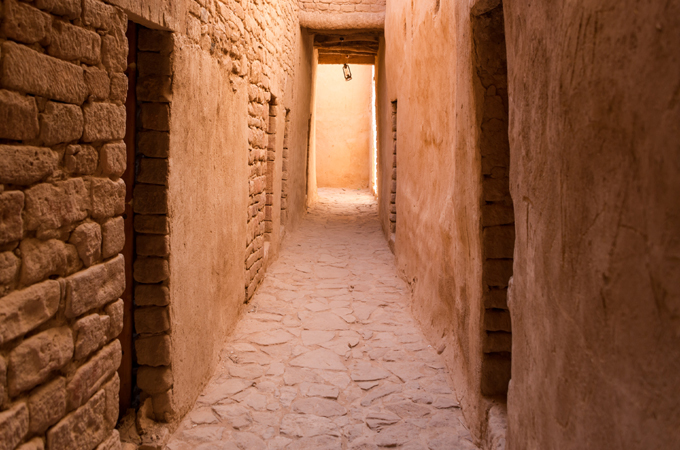
AlUla in Saudi Arabia and Pompeii in Italy have partnered to redefine cultural tourism, hosting a high-level delegation from the Archaeological Park of Pompeii under the Saudi-Italian Cultural Cooperation Framework to enhance how travellers experience historical sites.
The visit marked a
deepening of cultural ties between the two Unesco World Heritage sites and
explored how shared expertise can enhance conservation, interpretation, and
visitor experience.
Set amid sweeping
desert canyons and lush oases, AlUla is a living museum of human civilisation.
Its signature site,
Hegra, was the first place in Saudi Arabia inscribed on the Unesco World
Heritage List and is home to monumental tombs carved by the Nabataeans more
than 2,000 years ago.
Surrounding it are ancient kingdoms at Dadan,
mystical inscriptions at Jabal Ikmah, and the mudbrick lanes of Old Town, all
revealing more than 200,000 years of continuous human history.
Over several days,
experts from Pompeii and AlUla exchanged insights on how heritage sites can
evolve to meet the expectations of modern travellers while safeguarding
authenticity.
Workshops and site
tours focused on conservation methods, visitor flow, digital storytelling, and
sustainable tourism.
Phillip Jones,
Chief Tourism Officer at RCU, said the partnership shows how cultural
destinations can learn from one another to deliver richer and more meaningful
experiences: “Traveller’s today are not just looking at history, they want to
feel part of it. Through collaborations like this, we are ensuring that when
people walk through Hegra or Pompeii, they connect with the stories,
craftsmanship, and cultures that shaped our world. It is about preserving the
past while inspiring the traveller of tomorrow.”
The visit also
demonstrated the complementary nature of both destinations.
While Pompeii
represents a moment frozen in time, AlUla tells a story of resilience and
continuity, where heritage, landscape, and living culture remain intertwined.
Dr Abdulrahman
Alsuhaibani, Vice President of Cultural at RCU, said this diversity offers
powerful opportunities for learning: “Pompeii’s urban archaeology and AlUla’s
landscape archaeology present two very different approaches to uncovering the
past. By combining these perspectives, we are building new methods of
conservation and site interpretation that can elevate the visitor experience
for years to come.”
Dr Gabriel
Zuchtriegel, Director General of the Archaeological Park of Pompeii, added that
collaboration between the two destinations goes beyond science: “Pompeii and
AlUla share a belief that heritage can be a bridge between cultures. We are
united by a mission to protect history and to invite visitors to engage with it
responsibly, sustainably, and with wonder.”
The RCU-Italy
partnership extends far beyond archaeology, encompassing design, craftsmanship,
and education. Future projects include the Pompeii G.R.E.E.N. Conference on
Sustainable Heritage Management and joint exhibitions celebrating cultural
exchange between Saudi Arabia and Italy.
Silvia Barbone,
Vice President of Strategic Partnerships at the Royal Commission for AlUla
(RCU), said: “This visit marks the first milestone since our partnership with
Pompeii was signed in AlUla in the presence of Prime Minister Giorgia Meloni,
symbolizing a new chapter in Saudi-Italian cultural cooperation. Through this
collaboration, we will work together on heritage management and enhancing
visitor experiences, integrating culture with landscape and agriculture to
ensure that heritage remains a living resource, one that continues to educate,
inspire, and sustain communities for generations to come.” -TradeArabia News Service