
KEMPINSKI Hotels has remained a key player in the Middle East and will concentrate on selective growth in the luxury market by continuing to expand throughout the region as well as Africa and the Indian Ocean.
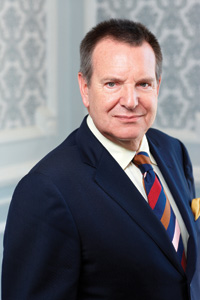
Ulrich Eckhardt, president Middle East, Africa and Indian Ocean said: “As our number of hotels grows, the challenge is in identifying the right people required to deliver the high standard of service. We are developing career days to discuss career opportunities with the next generation of hoteliers and continue to form a close collaboration with international and local hotel schools.”
Kempinski witnessed a downturn along with the economy, but figures have steadily risen to encouraging levels and the region is definitely showing signs of recovery. Kempinski last year opened two new hotels in the region – the Kempinski Residences and Suites, Doha, and Kempinski Nile Hotel, Cairo – both of which were the first ones in these locations. It also advanced with the development of Shaza – a contemporary, luxury brand which displays the values of the Middle East and North Africa – and opened its first hotel, the Shaza Al Madina, in Madinah, Saudi Arabia.
2011 will see the opening of Kempinski Hotel and Residences Palm Jumeirah, UAE, Kempinski Bahrain City Centre, Bahrain and another property in the Seychelles. Further, the Kempinski The Wave, Oman; Kempinski Burj Rafal, Riyadh; Kempinski Hotel Jeddah; Kempinski Al Khobar, Saudi Arabia; Summerland Kempinski, and Kempinski Residences Alabadiyah Hills, Beirut, Lebanon are on schedule to open in 2012. Shaza Hotels also has 10 projects in the pipeline.
“The Mena is an important area of expansion for us. We will continue our development in all the major Middle East cities such as the Kempinski Marsa Malaz in Doha and the Royal Maxim in Cairo as well as other hotels in Oman, the Seychelles, Lebanon, Saudi Arabia, Syria, Mauritius and Comoros Islands. Besides this, we have extensive development throughout many regions in Africa from Zanzibar to Morocco, Namibia to Egypt, Madagascar and beyond,” added Eckhardt.
Eckhardt believes that the demand for more security worldwide will grow in the years to come – with the Middle East being no exception – along with the trend towards booking automation and personal control of travel plans.
“The hotel industry has suffered, but the worldwide fascination for the region will continue. There will always be a demand for hotels, but travellers are now demanding additional services, which we are happy to offer as part of the Kempinski commitment to our guests, along with our European flair,” he added.