
For those of us who have spent years navigating the Middle East’s ever shifting commercial terrain, the word resilience has often felt like a polite industry placeholder. It feels like a gentle way of acknowledging the fatigue that comes from perpetual contingency planning. It has been the region’s catch all descriptor, used as readily as a travel writer might describe a desert horizon: accurate, yes, but never quite capturing the full story.
Yet as we move through the first half of 2026, something more structural is taking shape. What we are witnessing is not a rebound, nor a recovery. It is a recalibration, more like a shift from reactive survival to a forward leaning, high velocity vision of how the region intends to do business.
Despite the grey zones created by geopolitical headlines and the volatility of the year’s opening months, April has brought with it a noticeable change in tone. The narrative has moved from disruption response to deliberate preparation. And nowhere is this more evident than in the strategic decision to shift Arabian Travel Market (ATM) 2026 to August.
On paper, it is a date change. In practice, it is an act of regional self determination. Moving the Middle East’s most influential travel gathering from its traditional May slot to August 17 to 20 is a quiet but unmistakable declaration: the summer slowdown is no longer a given. By positioning ATM at the tail end of the season, the industry is effectively transforming August into the launchpad for the 2027 fiscal year. A bold reordering of the calendar that mirrors the Travel 2040 mindset. Legacy cycles are being rewritten to serve a market that no longer waits for peak season to innovate.
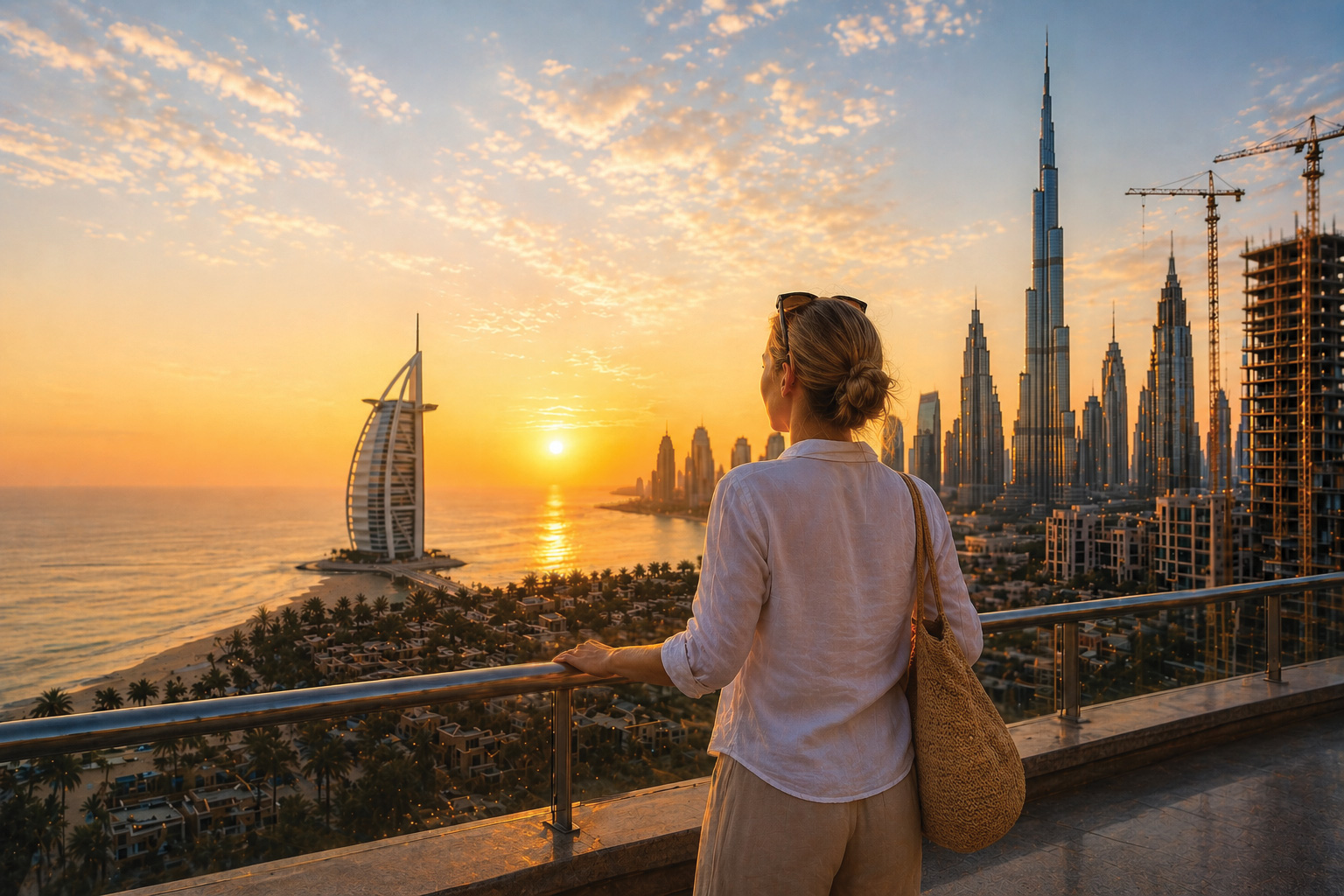
You see this same energy in the floor by floor modernisation of The H Dubai, in the revitalisation of Fisherman’s Cove in the Seychelles, and in the steady hum of construction cranes across the region. The message is consistent: the work does not pause for the heat, and it certainly does not pause for the headlines.
Somewhere along the way, this resilience, once a conscious effort, has become instinctive. It is now built into the region’s DNA. With Dubai alone projected to add thousands of rooms by 2028, investor confidence is looking well beyond the immediate horizon. The Middle East is no longer reacting to shocks; it has built an ecosystem, from aviation connectivity to digital first hotel operations, that can absorb pressure without losing momentum.
As we saw with Lobby and the rise of human in the loop automation, the goal is no longer to simply withstand uncertainty. It is to equip teams to navigate it with fluency. By the time the industry convenes at ATM this August, the conversation will be about how we used the summer to accelerate past global competitors.